Happy New Year, everyone, and welcome to this week's insights post and to the first week of our focus on Personal Resilience for 2026.
I post a Weekly Insights article each week. Each article is a compilation of the insights I posted the previous week across all my social media platforms. Each insight is a micro-learning post offering practical guidance on mindfulness, meditation, and resilience.
This week, we have more on Loving Awareness with sections on Gratitude and Compassion. We continue with the Frictionless Way as we explore Panoramic Vision, Mindful Walking, and Group Meditation. Plus an insight into Optimism and how it affects your Personal Resilience.
Optimisim & Resilience
Want to know what centenarians have most in common?
It isn't diet, genetics or exercise. It's Optimism!
A 2022 study from Harvard T.H. Chan School of Public Health followed nearly 160,000 women for up to 26 years and found:
✨ The most optimistic lived 5.4% longer
✨ They were 10% more likely to live past 90
✨ These benefits held regardless of health, background, or depression
Optimism isn't naïve positivity.
It's a resilience skill — the capacity to keep going, adapt, and outlive challenge.
That's why resilience is the foundation of everything we're exploring in 2026 at Bromley Mindfulness and on the online meditation course.
More to come on Resilient Optimism this week on social media, in the classes, and in next week's Weekly Insights roundup.
Click here to read a good article on the study-->
Gratitude
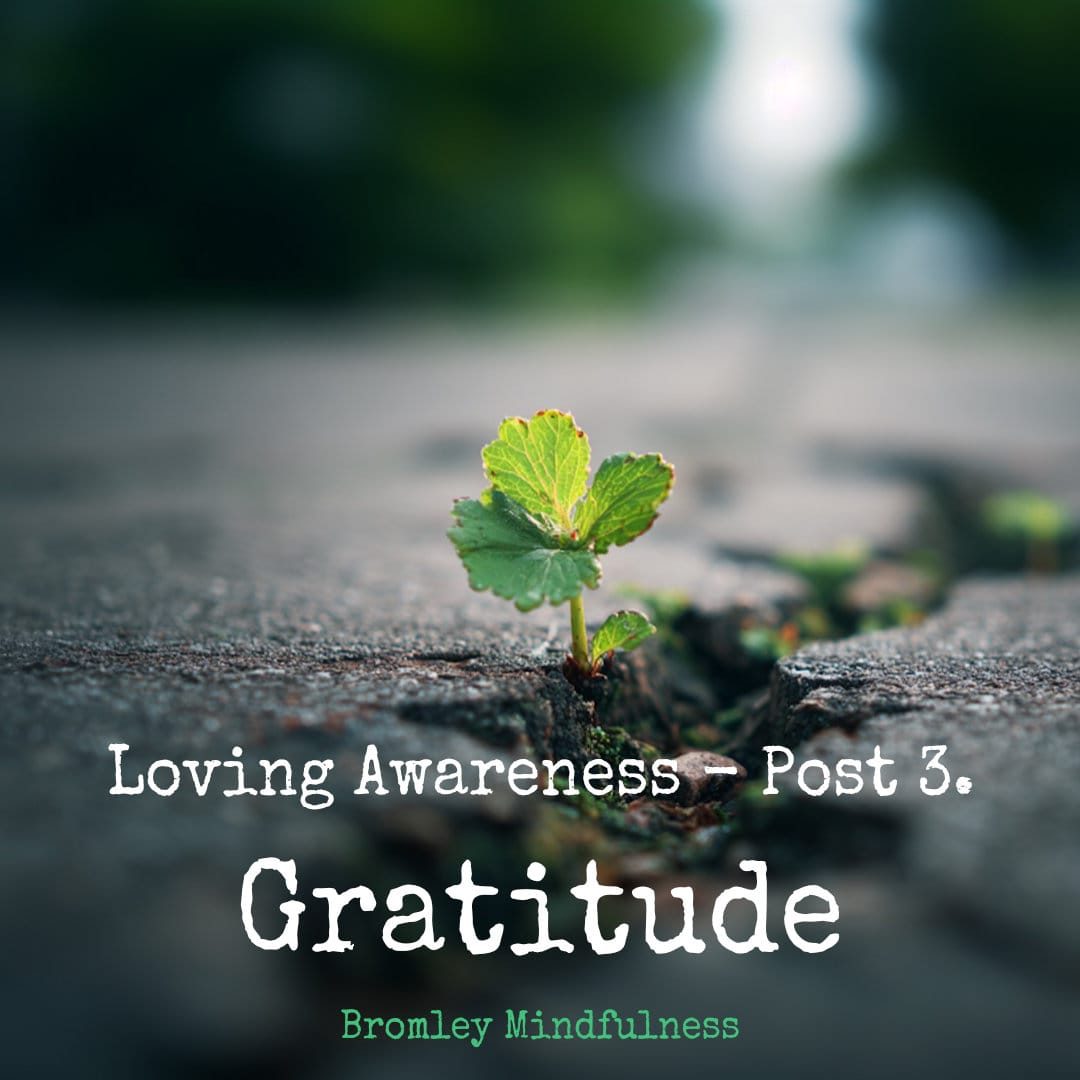
Gratitude isn't about feeling thankful. It's about realising something unique: out of all humanity, only you can appreciate what you're experiencing right now.
Appreciation is anything you enjoy spending time doing.
Gratitude is the realisation that you are uniquely able to appreciate that experience. Only you.
Our culture limits what we should feel grateful for. We are left with a small set of "big" things.
🌱 Of course, we want to feel grateful for those, but there is no reason why we shouldn't feel grateful for more "small" things:
- The way the light shines on a surface
- A feeling of comfort in your clothing or from your furniture
- Warmth
- The wind in your face
- The calmness that the breath brings
Take a moment now to find something small around you that you appreciate, no matter how small, and notice that only you can experience it as you are now.
🌟 And repeat that as often as you wish with as many "small things" as you want.
Compassion
Compassion Isn't Just a Feeling — It's a Drive 💛
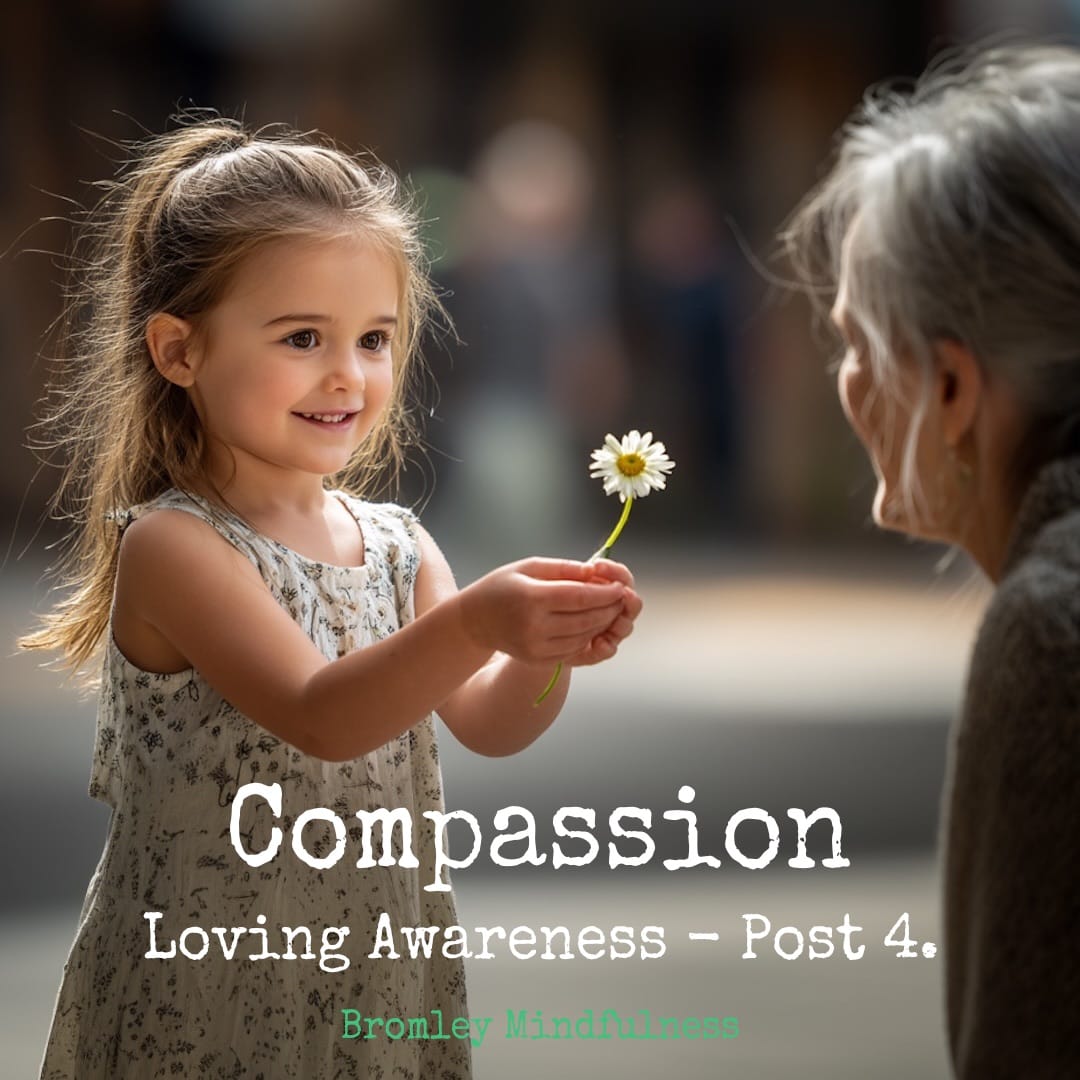
We often think of compassion as an emotion, but it's more than that. Compassion is a drive — the urge to take action and help reduce someone's suffering.
You can see this across nature. Dolphins have been known to rescue drowning humans. Dogs save other animals from danger, and many animals adopt creatures of other species. Humans do, for example. We call them pets. This compassion drive appears to be hardwired in many social animals.
The problem with modern life ⚠️
Our natural compassion often can become filtered and selective. The media focuses our compassion on certain groups while ignoring others. We then extend compassion selectively, which weakens our sense of compassion and withers it, creating a selfish society.
Self-compassion isn't selfish 🌱
Many of us were raised to believe that being kind to ourselves is self-indulgent. That self-compassion is making excuses. We become conditioned to believe that focusing on our own well-being is inappropriate when others are suffering.
Self-compassion means treating yourself with the same support and understanding you'd offer a good friend, and speaking to yourself as a supportive friend would.
Before you begin a flight, the safety information states that if the oxygen supply is affected, the oxygen masks will drop down, and if you are responsible for someone less able than you, you must put your own mask on first. In our culture, too many of us starve ourselves of oxygen and fail to support the ones we love.
It means:
- Being charitable with yourself when you struggle
- Allowing yourself breaks without guilt
- Speaking to yourself the way you'd speak to someone you care about
The compassion practices I teach have changed my life and the lives of many of my students, as they tell me. I continue to teach and refine these over time.
Panoramic Vision
Panoramic Vision Is Your Brain's Safety Signal
Look into the distance
- Look at the clouds
- The horizon
- The hillside
Notice what happens to your stress.
You will relax.
It’s simple. And it’s backed by solid science.
Why does this work?
When we scan the distance, we're doing something our brains associate with safety.
In the jungle, among dense trees, you can't see what's around you. Danger could be anywhere.
But when you can see into the distance?
Your brain receives a message: You’re safe
This is primal. Hardwired. Automatic.
The view matters
Why do penthouses cost more? The view.
People instinctively know that looking out at the distance is restorative
They're willing to pay for it
You don't need to pay
Try it the next time you feel stressed:
Step outside if you can.
Let your gaze soften into the distance.
Notice the shift.
No meditation cushion needed.
No special technique.
Just panoramic vision. Your brain knows what to do.
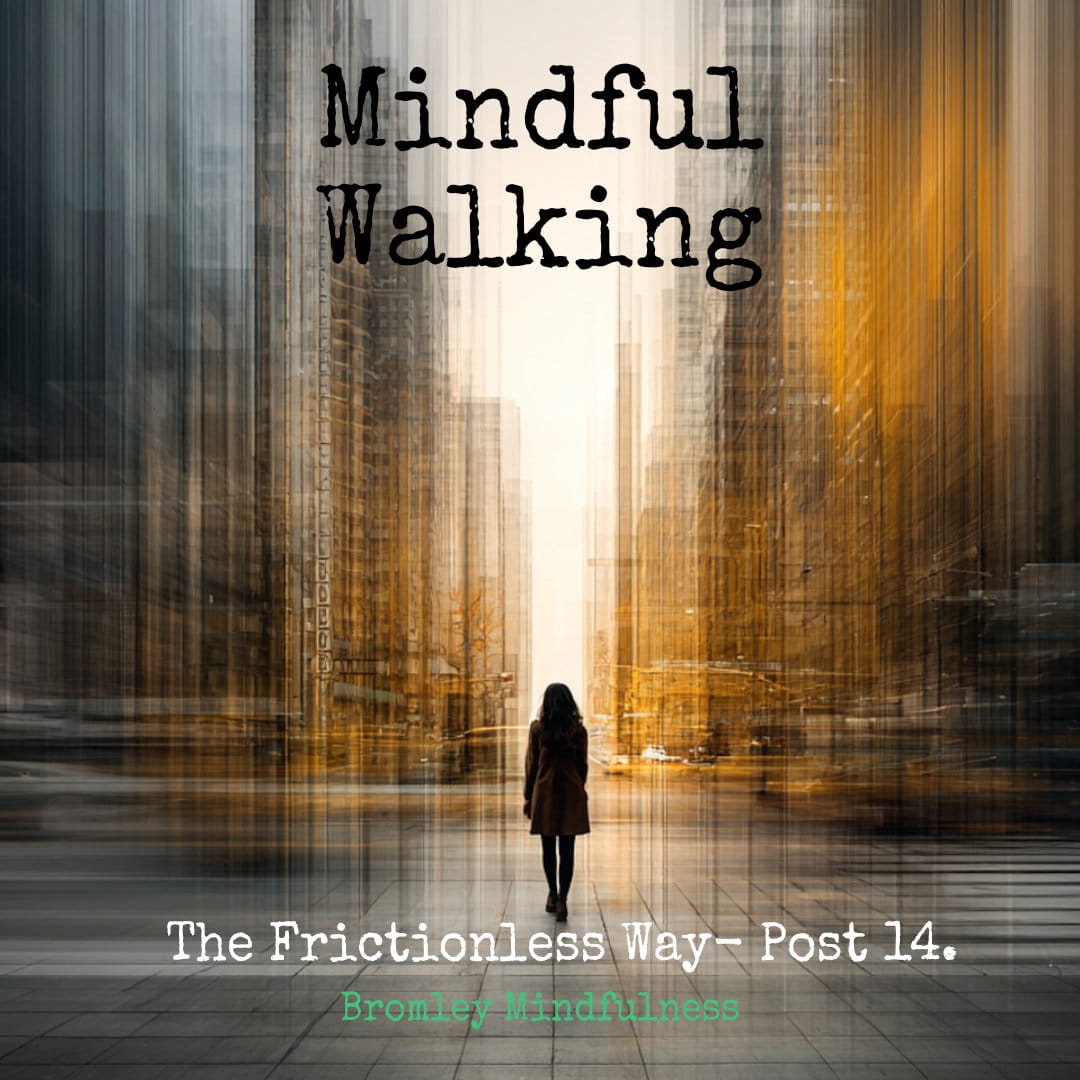
Mindful Walking
Mindful walking is immersing yourself in the experience of walking.
Everything. The sensory experience, the wind, coolness, warmth of the body, the sun, sounds, feet on the ground, other pedestrians. everything.
Then the thoughts find their place as part of the experience of the present moment.
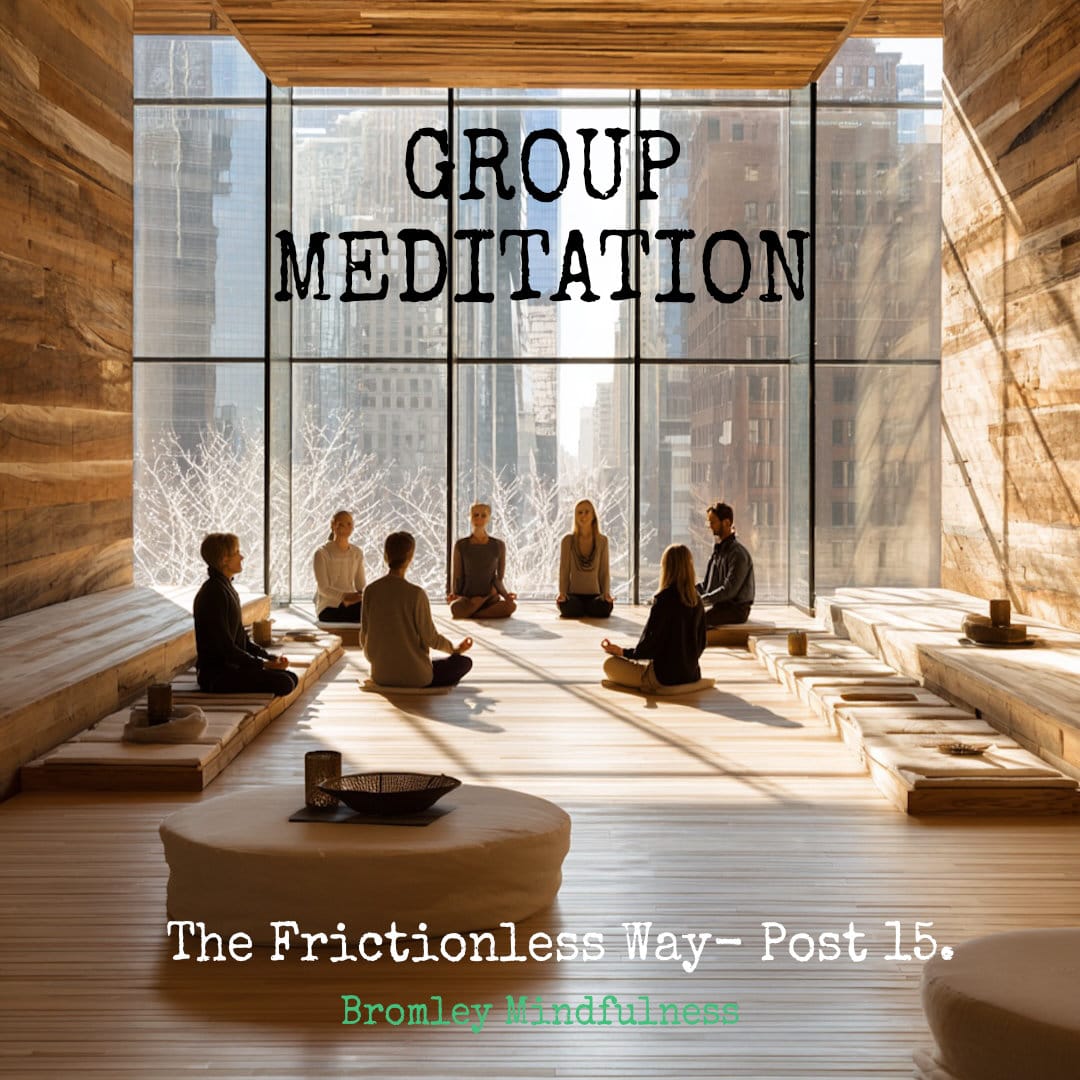
Group Meditation
Ever wondered why meditators meditate in a group?
When you meditate with others, something shifts. Your experience gets amplified. Whatever you're working on in your practice - calming the mind, relaxing the body, building focus - it deepens.
Here's how it works:
- If you're meditating to calm the mind → it calms more
- If you're meditating to relax → you relax more deeply
- If you're building concentration → it strengthens faster
The group creates an energy that elevates your individual practice. You don't have to do anything special. You just benefit from being in the shared space.
This happens in person most strongly. But even online group sessions carry some of this effect.
There's something about knowing others are practising with you - even online - that changes the experience.
This is the power of group meditation.